


Equity, Profits Interests, and Phantom Stock for Key Restaurant Staff
Your chef, your GM, your beverage director. These are the people who can make or break your restaurant. So sooner or later, just about every owner I work with starts thinking about giving one of them a piece of the action. Lock them in, get everybody rowing in the same direction.
I get it, and it is usually the right instinct. But let me tell you how it tends to go wrong. The owner tells his chef “you’re my partner now,” they shake on it over a good bottle of wine, and nobody writes anything down. Two years later the chef walks, or somebody gets an offer to buy the place, and suddenly we are paying lawyers to figure out what that handshake actually meant. That is the expensive way to do this, and I have cleaned it up more times than I can count.
There is a better way. A few of them, actually, and most let you reward your key people without handing over the keys to the building. The whole game is matching the structure to what you actually want to happen.
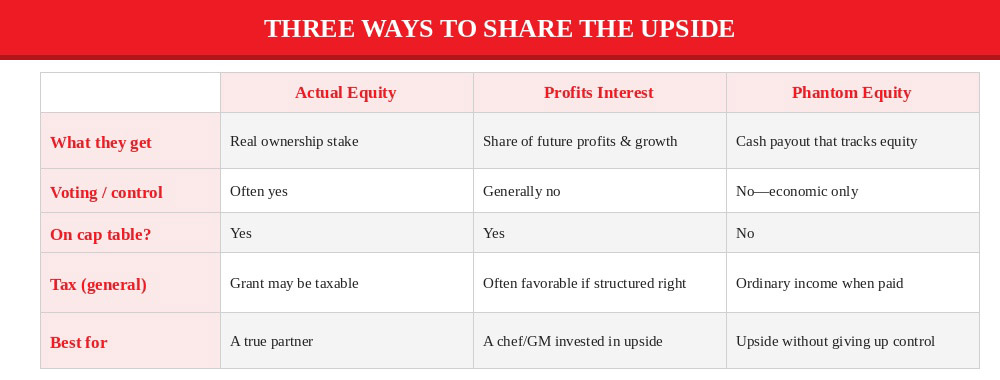
Actual Equity: Making Them an Owner
Handing someone real equity, whether membership units in your LLC or shares in your corporation, gives them the strongest sense of ownership. They share in the profits, and a lot of the time they get a vote on the big decisions too.
That is also exactly where the trouble starts. Real equity puts the person on your cap table, it makes any future buyout messier, and it can hand them legal rights you never meant to give, like the power to vote and the right to demand a look at your books. If you are going to grant equity, do it on purpose and with your eyes open, and build in vesting and buy-sell terms from day one. Equity is easy to give and a real headache to take back.
Profits Interests: The Middle Ground for LLCs
A profits interest gives someone a share of the company’s future profits and growth, but not a piece of what the business is worth right now. Put simply, they share in the value you build from here forward, not the value you already created with your own money and years of work.
This is the one I reach for most often with chefs and managers in an LLC. You can have it vest over time or when they hit real performance targets, and when it is set up correctly it usually gets better tax treatment than just cutting a bigger bonus check. It lands right in the middle between full ownership and a plain cash bonus. They get genuine skin in the game, and you keep your existing equity intact.
Phantom Equity and Bonus Plans: Upside Without Ownership
Phantom equity gives someone the feel of ownership without actually handing any over. They get a contract right to a cash payout tied to how the company does or to a future sale. No vote, no right to your books, nothing on the cap table. And when they leave, there is no equity to chase down and buy back.
In the same family are the simpler plans you can bolt on:
- Profit-sharing pools tied to the EBITDA of a specific location.
- Bonus plans tied to numbers your people can actually move, like food cost, labor cost, or review scores.
For a lot of owners, honestly, this is the sweet spot. You drive the behavior you want and you give up zero control to get it.
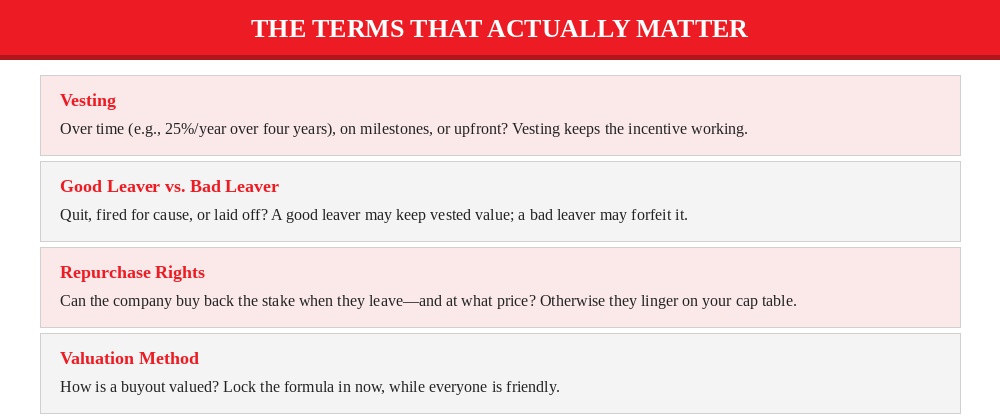
Vesting, Forfeiture, and the Exit
Whatever you decide to use, the terms around somebody leaving are what protect you. Before anyone signs a thing, the deal needs to answer four questions:
- Vesting. Does it vest over time, say a quarter a year over four years, or when they hit milestones, or is some of it theirs the day they sign?
- Good leaver versus bad leaver. What happens if they quit, get fired for cause, or get laid off? Somebody who leaves on good terms might keep what vested. Somebody who walks out early or gets fired for cause might forfeit it.
- Repurchase rights. Can the company buy the stake back when they go, and at what price? Skip this and a former employee can sit on your cap table forever.
- Valuation. How do you put a number on a buyout or payout? Lock the formula in now, while everybody still likes each other, not later in the middle of a fight.
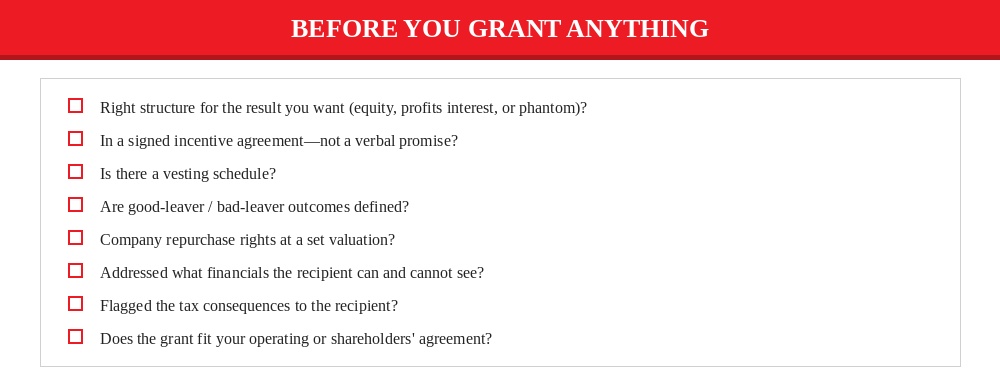
And get every bit of it into a signed incentive agreement. Not a text, not a chat at the end of a Friday-night shift. A real document. “We talked about it” is how these things turn into lawsuits, and I am the guy who gets the call when they do.
Set Expectations Clearly
The whole point of giving someone upside is to motivate them, not to confuse them or set up a brawl down the line. So be straight with your people about three things up front:
- The deal lives in the documents, and it is not guaranteed forever.
- There may be a tax hit for them on certain grants and bonuses, so tell them early.
Spell out which financials they get to see and which they do not, before they ask.
Conclusion
Done right, sharing the upside turns your best people from employees into real partners in the restaurant’s success, and you do it without giving away more control than you meant to. The right mix of equity, profits interests, or phantom stock comes down to your structure, your goals, and your team.
What you do not want is to sort all this out after the fact. If you are thinking about giving a key player a stake, build it the right way before you make the promise. That is a conversation worth having.
—————————————————
About the Author
Andreas Koutsoudakis is a Partner and Co-Chair of the Hospitality & Restaurant Law Group at Davidoff Hutcher & Citron LLP. His practice focuses on the restaurant and hospitality industry, backed by the firm’s more than 50 years of experience representing New York businesses. He can be reached at aak@dhclegal.com.
This article is for informational purposes only and does not constitute legal advice. Every situation is different, and you should consult with qualified counsel to evaluate your specific circumstances.