


Corporate Formalities Every New York Restaurant Owner Must Respect
Forming an LLC or corporation is step one. Step two—the one many restaurant owners skip—is actually treating the company like a separate legal person. If you don’t, a court can “pierce the corporate veil” and hold you personally liable for the entity’s debts.
I see this constantly in restaurant disputes. An owner forms an LLC, assumes they’re protected, and then runs the business like it’s their personal piggy bank. When a creditor sues—whether it’s a landlord, vendor, or wage claimant—the first thing their lawyer does is look for evidence that the LLC was just a shell. If they find it, your personal assets are on the table.
The good news: maintaining the liability shield isn’t complicated. It just requires discipline.
FIGURE 1: Veil-Piercing Risk Factors
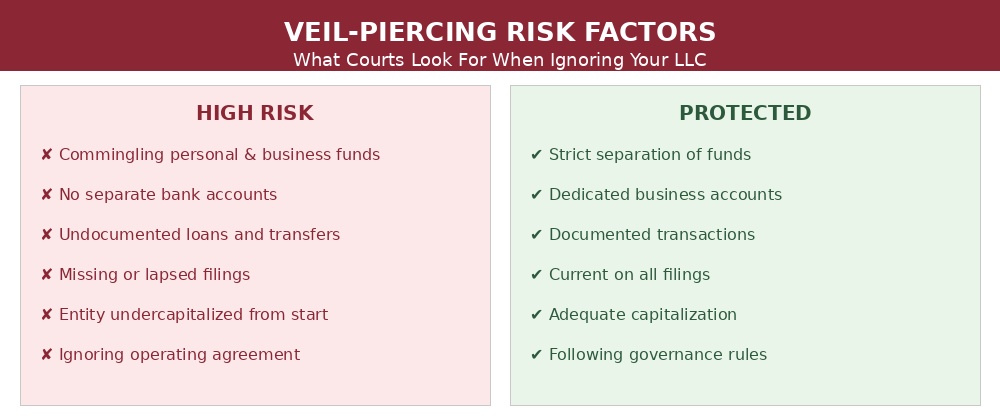
Separate Bank Accounts and No Commingling
This is the big one. Sloppy cash management is the first thing creditors and courts look at when trying to pierce the veil.
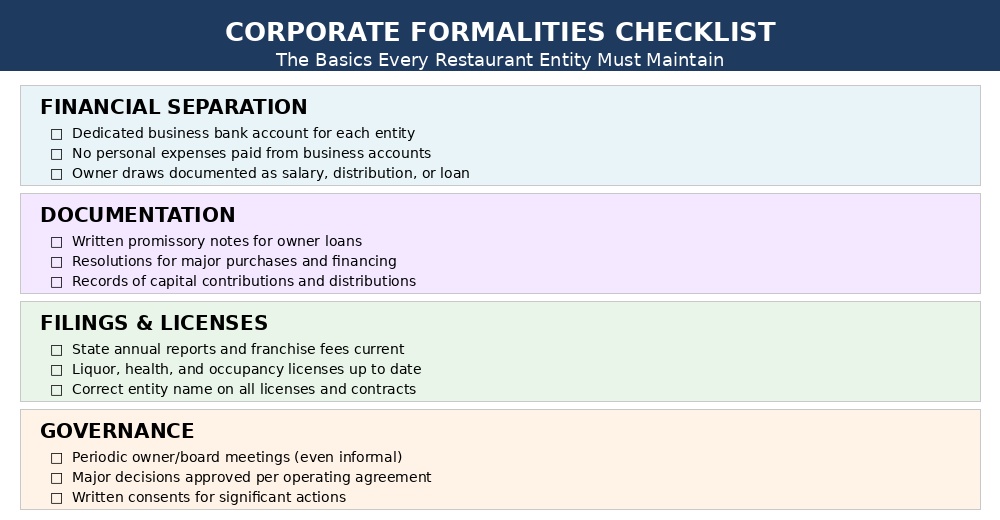
- Maintain dedicated business bank accounts for each entity. If you have multiple restaurants in separate LLCs, each one needs its own account.
- Never pay personal expenses from the restaurant account. Not your car payment, not your mortgage, not your kids’ tuition.
- Document owner draws properly. If you need to take money out, do it as a documented salary, distribution, or loan—not just a random transfer.
Red flag: Using the restaurant’s account to pay for personal expenses—even occasionally—creates evidence that you don’t treat the entity as separate from yourself. That’s exactly what a plaintiff’s lawyer needs
Proper Documentation for Major Transactions
You don’t need elaborate board books or formal corporate minutes for a restaurant LLC. But you do need clear, dated records of significant transactions:
- Loans to or from owners: A basic promissory note with amount, interest rate, and repayment terms.
- Large purchases and equipment financing: Written approval from members/managers.
- Intercompany transfers: If you move money between related entities, document why and on what terms.
- Capital contributions and distributions: Track what goes in and what comes out.
The standard is simple: could a third party looking at your records understand what happened and why? If the answer is no, you have a documentation problem.
Keep Up With Required Filings and Licenses
An entity that doesn’t pay its own obligations or maintain its own paperwork is easier for a court to disregard:
- File state and city reports on time. Pay franchise fees and annual fees when due.
- Keep licenses current. Liquor license, health department permit, certificate of occupancy—all need to be up to date.
- Use the correct entity name. Make sure licenses and contracts are in the name of the actual operating entity—not your personal name or a different LLC.
Pay Trust Fund Taxes on Time
This isn’t technically a “corporate formality,” but it’s critical: failing to pay trust fund taxes creates personal liability regardless of your entity structure.
FIGURE 2: Trust Fund Tax Warning
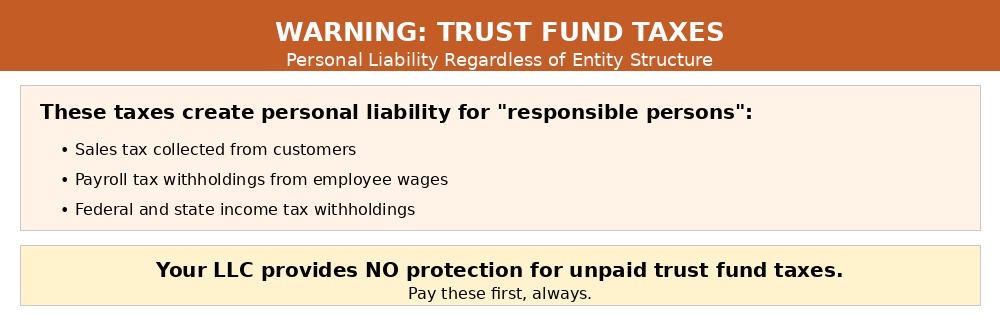
When cash gets tight, restaurant owners often delay sales tax or payroll tax payments to cover more immediate needs. This is a mistake. These are funds you collected or withheld on behalf of the government—they were never yours to spend. The IRS and state tax authorities can—and will—pursue you personally.
Respect Corporate Governance
Your operating agreement or bylaws set out how decisions are supposed to be made. If you ignore your own rules, a court may feel free to do the same:
- Hold periodic owner or board meetings. They can be informal—even a documented phone call—but they should happen.
- Approve major decisions properly. If your operating agreement requires member approval for transactions over a certain dollar amount, get it.
- Use written consents. A simple signed document saying “the members approve X” is often enough.
FIGURE 3: Corporate Formalities Checklist
Conclusion
Corporate formalities aren’t busywork—they’re the conditions for getting the liability shield you thought you bought when you formed your LLC. For restaurant owners, staying disciplined here is one of the best risk-management tools you have.
The veil doesn’t pierce itself. It gets pierced when owners treat their entities as extensions of themselves rather than separate legal persons. Keep the money separate. Document the big stuff. Stay current on filings. Follow your own rules. Do these things consistently, and your liability protection will hold up when you need it most.
If you’re not sure whether your current practices are adequate—or if you’ve already been sloppy and need to clean things up—let’s talk.
——————————————–
About the Author
Andreas Koutsoudakis is a Partner and Co-Chair of the Hospitality & Restaurant Law Group at Davidoff Hutcher & Citron LLP. A litigator with deep roots in the restaurant industry, Andreas represents restaurant owners in complex commercial disputes, partnership conflicts, and corporate governance matters. He can be reached at aak@dhclegal.com.
This article is for informational purposes only and does not constitute legal advice. Every situation is different, and you should consult with qualified counsel to evaluate your specific circumstances.