


Most restaurant sales need a signature from someone who gains nothing from the deal. One owner lined up her landlords before the letter of intent was signed and closed on time; another waited, paid a $250,000 fee and still guarantees a lease for a restaurant he no longer owns.
Selling the Restaurant: Consents
- This white paper is based on a composite of real matters handled by the DHC Hospitality & Restaurant Law Group. Names, locations, cuisines, and identifying details have been changed to protect client confidentiality. The legal principles discussed are illustrative and should not be relied upon as legal advice for any specific situation.
Most owners assume that once a buyer agrees on a price, the sale is between the two of them. In most restaurant sales it is not. A landlord or a licensing agency may have to approve the deal, and a party whose signature you need, and who gains nothing from the sale, can delay it or charge for it. This is the story of an owner who treated every consent as part of the price, and of a peer who left them for the end.
The Offer
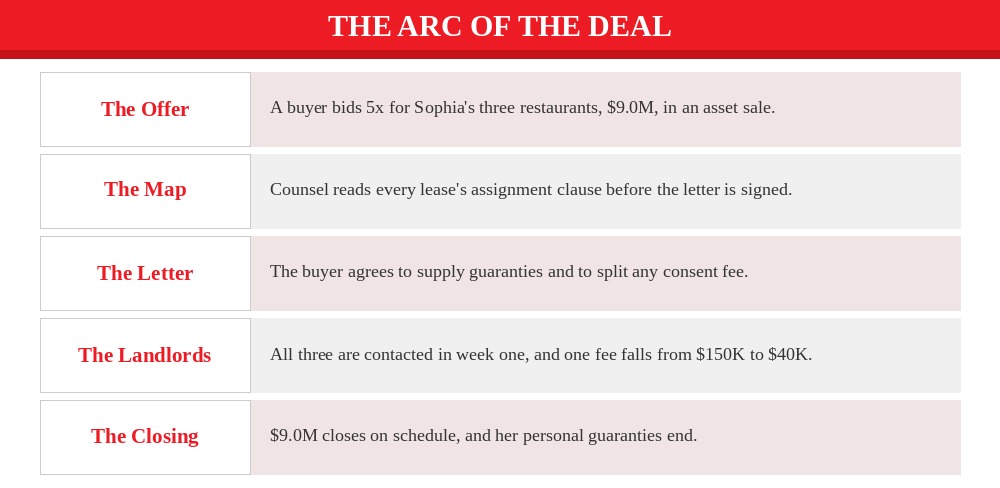
Sophia built a three-location restaurant group in Manhattan and on Long Island over eight years. The three restaurants brought in about $13 million a year in sales and earned about $1.8 million before interest, taxes, depreciation and amortization. A regional operator offered five times earnings, $9.0 million, structured as a purchase of the assets, so each lease and license would have to move to the buyer. Sophia had personally guaranteed all three leases.
The Map
Before the letter of intent was signed, her deal counsel read the assignment clause in each lease and listed every approval the sale would need. The first lease allowed an assignment with the landlord’s consent, which the landlord could not unreasonably withhold. The second let the landlord refuse for any reason and take a share of any value paid for the lease. The third gave the landlord the right to take the space back instead of consenting. None of the three released the tenant’s guarantor on an assignment unless the landlord agreed.
The Letter
The letter of intent listed every consent the deal needed and made the buyer responsible for the financial statements and replacement guaranties the landlords would ask for. It split any consent fee equally, capped Sophia’s share at $50,000, and made the release of her personal guaranties a condition of closing. It also committed both sides to approach the landlords as soon as the letter was signed, not after the purchase agreement.
The Landlords
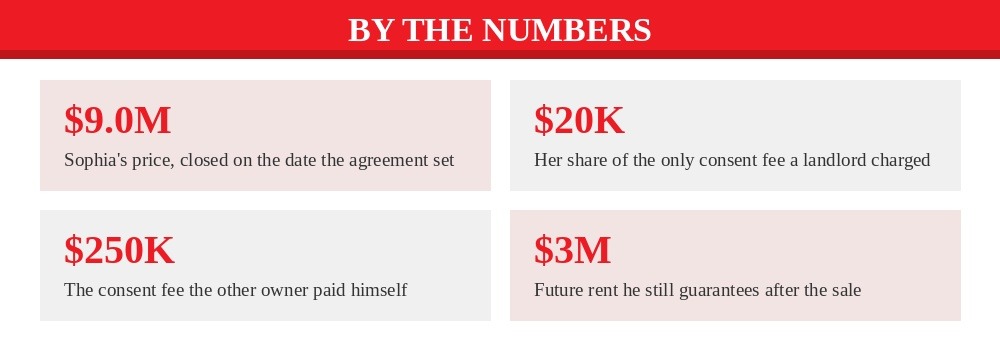
Counsel sent all three landlords the buyer’s financial package in the first week after the letter was signed. The first landlord consented within three weeks. The second asked for a $150,000 transfer fee, and once counsel showed that the buyer’s parent company would guarantee the lease, the landlord accepted $40,000, which Sophia and the buyer split. The third landlord gave up its right to take back the space in exchange for a five-year extension the buyer wanted anyway. Each consent released Sophia’s guaranty as of closing and put the buyer’s guaranty in its place.
The Other Owner
An owner Sophia knew from the industry signed a letter for his two-location group at $5 million. His letter did not mention consents. His counsel first contacted the landlords after the purchase agreement was signed, two months before the planned closing. One landlord took four months to answer. It asked for a $250,000 fee and refused to release his personal guaranty, because the buyer had not offered a guaranty of its own. The buyer would not share the fee, and the closing date passed twice while he negotiated.
The Closing
Sophia closed at $9.0 million on the date the purchase agreement set, ninety days after signing. Her share of the consent fee was $20,000, and she left the closing with no personal liability on any of the three leases. Her colleague closed five months late. He paid the $250,000 fee himself, and he still guarantees a lease with nine years left on it, about $3 million of future rent, for a restaurant he no longer owns.
The Lesson
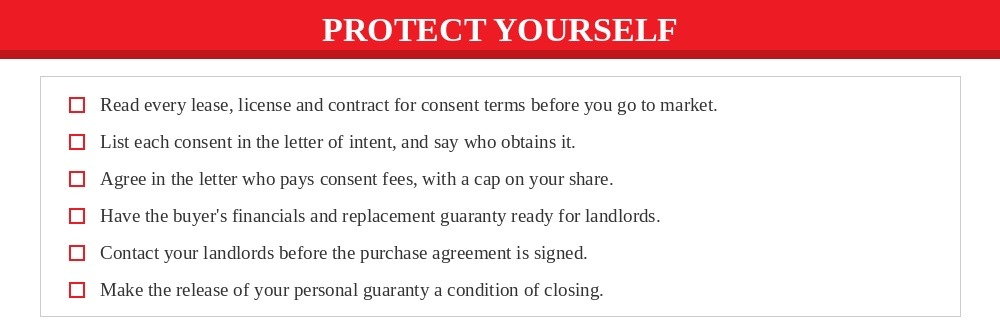
Every consent a sale needs is a signature from someone who gains nothing from the deal, and the later you ask for it, the more it costs. Read every lease, license and key contract for consent terms before you go to market. List each consent in the letter of intent, say who will obtain it, and agree who pays any fee, with a cap on your share. Have the buyer’s financial statements and replacement guaranty ready before anyone calls a landlord. Make the release of your personal guaranty a condition of closing, because a guaranty that survives the sale is a debt for a business you no longer control.
Sophia’s landlords were no friendlier than her colleague’s. She asked them early, with everything they needed in hand, while both sides of the deal still had reasons to help.
If you recognize your situation in this story, you are not alone, and you have options.
The DHC Hospitality & Restaurant Law Group represents restaurant and hospitality owners in sales, acquisitions, partnership disputes, and ownership transitions throughout New York, backed by the firm’s more than 50 years of experience representing New York businesses.
—————————————
Contact us for a confidential consultation:
Andreas Koutsoudakis, Esq. | Partner & Co-Chair
(212) 557-7200 | aak@dhclegal.com
This article is for informational purposes only and does not constitute legal advice. Every situation is different, and you should consult with qualified counsel to evaluate your specific circumstances.