


How One Owner’s Letter of Intent Held Her Price Through Diligence, and How a Higher Offer Lost Value in Exclusivity
Selling the Restaurant: The Letter of Intent
- This white paper is based on a composite of real matters handled by the DHC Hospitality & Restaurant Law Group. Names, locations, cuisines, and identifying details have been changed to protect client confidentiality. The legal principles discussed are illustrative and should not be relied upon as legal advice for any specific situation.
This white paper is based on a composite of real matters handled by the DHC Hospitality & Restaurant Law Group. Names, locations, cuisines, and identifying details have been changed to protect client confidentiality. The legal principles discussed are illustrative and should not be relied upon as legal advice for any specific situation.
Most owners treat a letter of intent as a handshake on price, because the letter says it is not binding. In most letters the price is not binding, but the exclusivity period is, and every term the letter leaves open is settled later while no other buyer is at the table. This is the story of an owner who negotiated her letter of intent as carefully as she later negotiated the purchase agreement, and of a peer who signed a higher number on a shorter letter.
The Offer
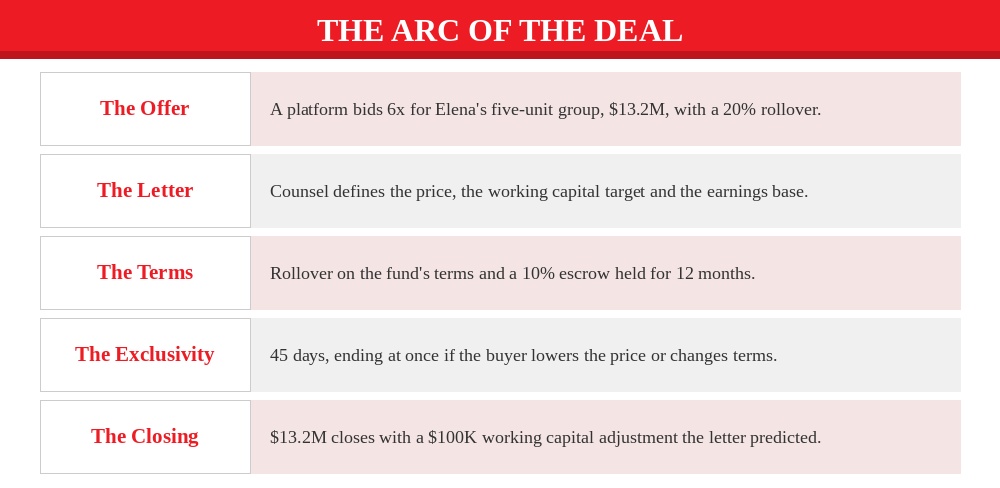
Elena built a five-location Mediterranean grill group across Queens and Nassau County over nine years. The business earned about $2.2 million a year before interest, taxes, depreciation and amortization. She spent the year before her sale with deal counsel, a sell-side banker, a transaction accountant and a tax adviser, and her banker brought the business to several private equity-backed platforms. The strongest bid came at six times earnings, $13.2 million, with twenty percent of the price rolled into the platform’s equity. The platform sent a two-page letter of intent and asked her to sign it within the week.
The Letter
Her deal counsel read the draft as the first version of the purchase agreement. The price was stated as a single number “subject to customary adjustments,” and counsel asked the platform to say what those adjustments were. The revised letter stated the price on a cash-free, debt-free basis and set the working capital target at the average of the trailing twelve months. It also named the earnings figure the price was based on, taken from her sell-side quality of earnings report. The letter went through four rounds over two weeks, and two other bidders stayed in the process the whole time.
The Terms
The letter placed Elena’s rollover in the same class of equity the fund held, on the fund’s own terms. It capped the escrow at ten percent of the price for twelve months and made the escrow the buyer’s only recovery for most breaches. Her role after closing was a six-month transition agreement, not a three-year employment agreement with a non-compete running from its end. The letter also listed the landlord consents the deal would need and committed both sides to start on them before signing.
The Exclusivity
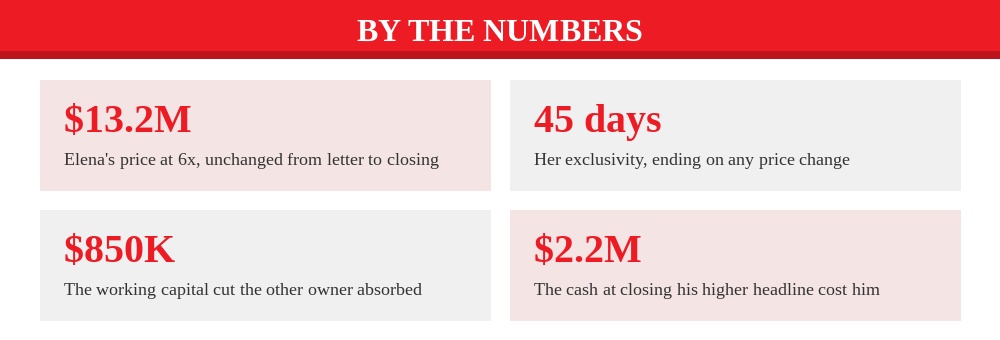
The platform asked for ninety days of exclusivity. Elena granted forty-five, with an extension only if the purchase agreement was substantially agreed, and the letter said exclusivity would end at once if the buyer proposed a lower price or materially different terms. The buyer’s diligence confirmed her numbers. The working capital adjustment at closing was $100,000, close to what the letter’s formula had predicted.
The Other Owner
An owner Elena knew from the industry signed a letter for his own group at $13.5 million, with the same twenty percent rollover. His letter was two pages long. It said the price was subject to customary adjustments and left the rollover terms, the escrow, any deferred price and his role after closing to be agreed in the definitive documents. He granted 120 days of exclusivity. In the third month the buyer proposed a working capital target that took $850,000 off the price. It also placed his rollover in a class paid after the fund’s and asked for an escrow of fifteen percent held for two years. One million dollars of the price became an earnout tied to new openings. The other bidders had moved on, and he accepted the terms.
The Closing
Elena closed at $13.2 million and received about $9.1 million in cash at closing, with her rollover held on the fund’s own terms. Her colleague’s deal closed at a stated $13.5 million. He received about $6.9 million at closing, with an earnout and a two-year escrow still between him and the rest. The higher headline price left him with $2.2 million less cash at the table.
The Lesson
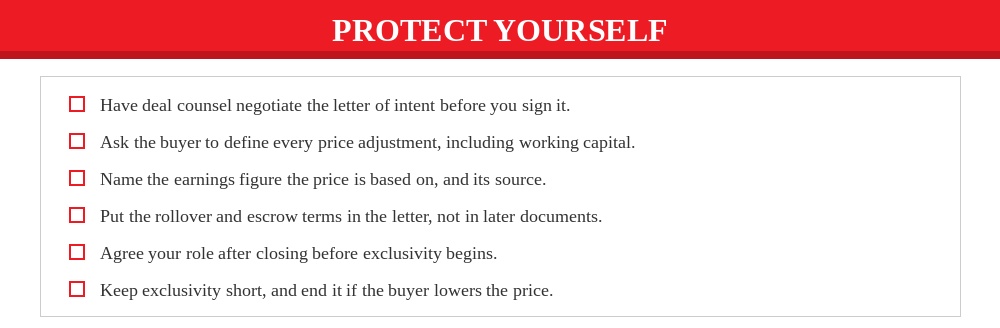
A letter of intent is the first draft of the deal, and every term it leaves open is negotiated during exclusivity, when the seller has no other buyer to turn to. Ask the buyer to define how the price will be adjusted, including the working capital target. State the rollover terms, the escrow and any earnout in the letter, along with the role you will play after closing. Keep exclusivity short and have it end if the buyer changes the price. Have deal counsel negotiate the letter before you sign it, because a seller has the most leverage on the day before the letter is signed.
Elena’s business was no stronger than her colleague’s, and her offer was lower. She settled the terms that decide what a seller keeps while other buyers were still at the table.
If you recognize your situation in this story, you are not alone, and you have options.
The DHC Hospitality & Restaurant Law Group represents restaurant and hospitality owners in sales, acquisitions, partnership disputes, and ownership transitions throughout New York, backed by the firm’s more than 50 years of experience representing New York businesses.
—————————————
Contact us for a confidential consultation:
Andreas Koutsoudakis, Esq. | Partner & Co-Chair
(212) 557-7200 | aak@dhclegal.com
This article is for informational purposes only and does not constitute legal advice. Every situation is different, and you should consult with qualified counsel to evaluate your specific circumstances.