


How the Advisers One Owner Chose a Year Early Changed What His Second Bite Was Worth
Selling the Restaurant: Your Team
- This white paper is based on a composite of real matters handled by the DHC Hospitality & Restaurant Law Group. Names, locations, cuisines, and identifying details have been changed to protect client confidentiality. The legal principles discussed are illustrative and should not be relied upon as legal advice for any specific situation.
This white paper is based on a composite of real matters handled by the DHC Hospitality & Restaurant Law Group. Names, locations, cuisines, and identifying details have been changed to protect client confidentiality. The legal principles discussed are illustrative and should not be relied upon as legal advice for any specific situation.
Most owners choose their advisers after the first offer arrives, and by then the buyer has been preparing for months. The team an owner puts together, and when, shapes both the price and how much of it survives the buyer’s diligence. This is the story of an owner who built his team a year before he sold, and of a peer who relied on the people he already had.
The Approach
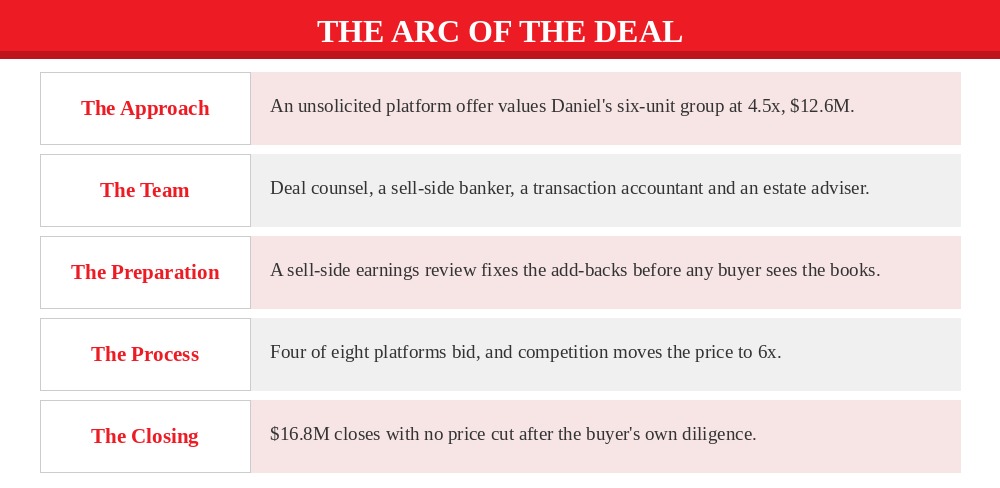
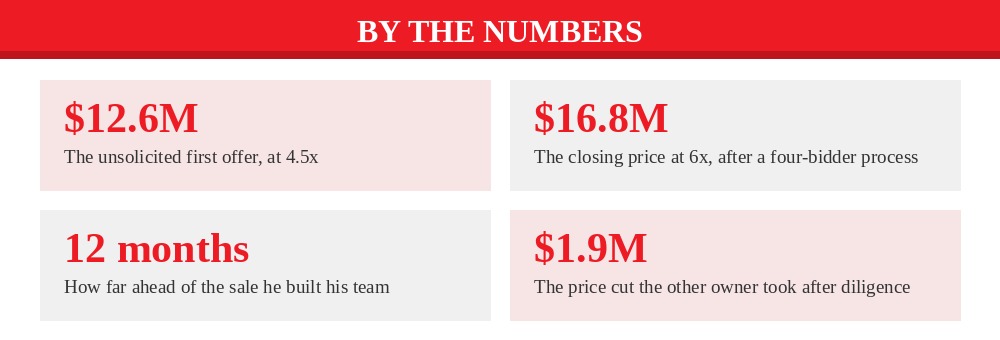
Daniel built a six-location Neapolitan pizzeria group across Brooklyn and Westchester over eleven years. The business earned about $2.8 million a year before interest, taxes, depreciation and amortization, and a catering line was growing faster than the dining rooms. A private equity-backed platform approached him with an offer of four and a half times earnings, $12.6 million, and asked for an answer within a few weeks. His longtime bookkeeper thought the number was fair, and the lawyer who had negotiated his leases offered to paper the deal.
The Team
Daniel told the platform he was not ready to sell that year and spent the next twelve months building a team for a sale. He hired deal counsel with a regular mergers and acquisitions practice and a sell-side banker who knew the restaurant platforms by name. A transaction accountant came on to examine his numbers the way a buyer would. Before any of them started, he met with a tax and estate adviser, because the planning a family wants to do is easier while the value of the business is still an estimate. Deal counsel coordinated the group, so every adviser worked from the same plan and the same timeline.
The Preparation
The accountant’s sell-side quality of earnings review found what a buyer’s review would have found. Some personal expenses ran through the company, tip reporting at two locations was inconsistent, catering costs were mixed into the dining room numbers, and a large repair had been booked in a way that understated one year’s earnings. Each item was corrected or documented before a buyer saw the books. Counsel cleaned up the entity records and collected the leases with their landlord consent requirements. It also identified the contracts that would need a third party’s approval. When the data room opened, the answers were already in it.
The Process
The banker took the business to eight platforms, and four submitted bids, including the platform that had made the first offer. Competition moved the price to six times earnings, $16.8 million, and the terms improved with it: a smaller escrow and a rollover on the same terms as the fund’s own equity. The buyer’s own quality of earnings review, the stage where many deals lose value, confirmed the sell-side numbers within a narrow range.
The Other Owner
An owner Daniel knew from the industry accepted a similar platform offer for his own group at five times earnings, $14 million, and kept the advisers he already had. His bookkeeper had never prepared a company for a buyer’s review, and his lawyer had never negotiated a purchase agreement with a private equity fund. The buyer’s review rejected add-backs his books could not support and found a payroll tax exposure no one had looked for. In the last weeks of exclusivity, with no other bidder to turn to, he accepted a price reduction of $1.9 million and closed at $12.1 million. The estate planning his family had discussed for years began only after the price was fixed.
The Closing
Daniel closed at $16.8 million, with no price reduction after the buyer’s diligence and with his estate plan already in place. His team’s cost was a small fraction of the $4.2 million between the first offer and the closing price, and most of that difference came from work done before any buyer arrived.
The Lesson
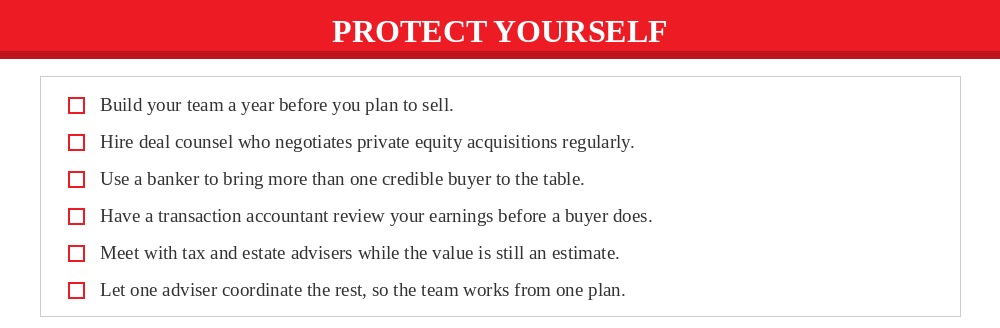
A private equity buyer comes to the table with deal lawyers, accountants, lenders and a banker of its own. An owner who meets that group with a bookkeeper and a lease lawyer is negotiating at a disadvantage before the first term is discussed. Build the team a year before you plan to sell. Hire advisers who do this work regularly, and let one of them coordinate the rest. Have your own numbers examined before a buyer examines them, and bring in tax and estate planning while the value of the business is still an estimate rather than a signed price.
Daniel’s business was no stronger than his colleague’s. He met the buyer’s team with a team of his own, and he assembled it before anyone asked him to.
If you recognize your situation in this story, you are not alone, and you have options.
The DHC Hospitality & Restaurant Law Group represents restaurant and hospitality owners in sales, acquisitions, partnership disputes, and ownership transitions throughout New York, backed by the firm’s more than 50 years of experience representing New York businesses.
—————————————
Contact us for a confidential consultation:
Andreas Koutsoudakis, Esq. | Partner & Co-Chair
(212) 557-7200 | aak@dhclegal.com
This article is for informational purposes only and does not constitute legal advice. Every situation is different, and you should consult with qualified counsel to evaluate your specific circumstances.