


What a Fund’s Timeline, Debt and Exit Plan Meant for One Owner’s Second Bite
Selling the Restaurant: Private Equity 101
- This white paper is based on a composite of real matters handled by the DHC Hospitality & Restaurant Law Group. Names, locations, cuisines, and identifying details have been changed to protect client confidentiality. The legal principles discussed are illustrative and should not be relied upon as legal advice for any specific situation.
When a private equity group makes an offer, the number arrives first and the machine behind it stays out of view. Owners negotiate the price and miss the fund’s clock, its debt and its exit plan, which together decide what the deal is actually worth to them. This is the story of an owner who learned to read the machine before she signed, and of a colleague who did not.
The Offer
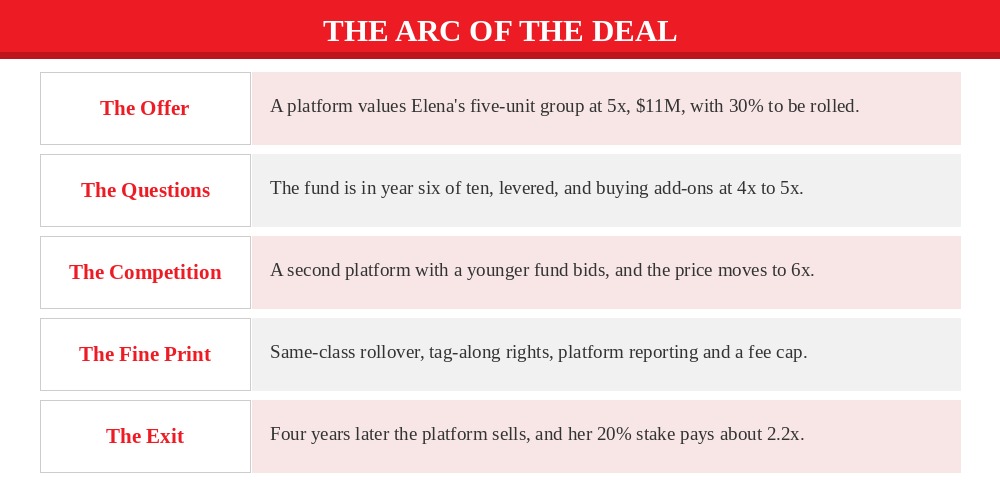
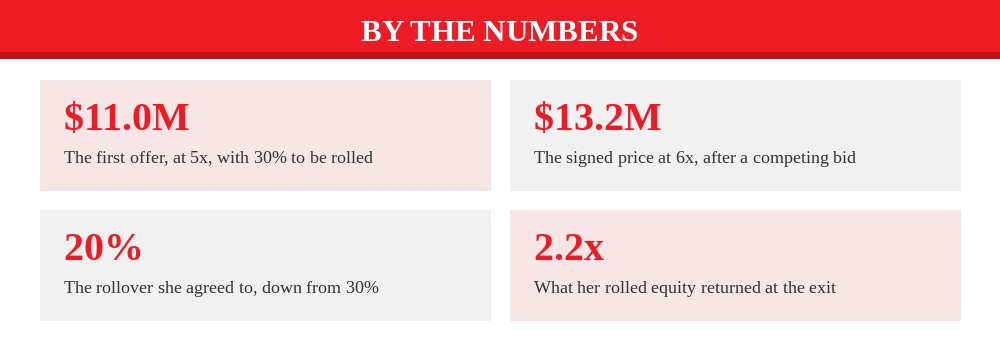
Elena built a five-location bakery-café group across Queens and Nassau County over fourteen years. The business earned about $2.2 million a year before interest, taxes, depreciation and amortization, the books were clean, and a wholesale line gave it a second source of revenue most cafés lack. The approach came from a private equity-backed platform assembling bakery-café brands in the Northeast. The offer was five times earnings, $11 million, with 30 percent of the price to be rolled into the platform’s equity. The partners were warm and the timeline was quick. “You’ll be one of us,” the deal lead told her, and he meant it as a selling point.
The Questions
Elena’s first call was to deal counsel, and the conversation started with the buyer rather than the price. The platform’s fund was in the sixth year of a ten-year life. It had already bought nine add-ons, all at four to five times earnings and financed largely with debt. A fund at that stage needs to sell within a few years, and the platform’s value at exit depends on how many add-ons it can buy cheaply before then. Elena’s five times was not a verdict on her business. It was the entry price the platform’s model required.
The Competition
Her banker brought a second platform to the table, backed by a fund in its second year with a longer runway and less debt on its existing companies. With a competing bid in hand, the first platform moved, and so did the second. Elena signed with the second platform at six times earnings, $13.2 million, and negotiated the rollover down to 20 percent. The multiple arbitrage still worked for the buyer at the higher number, which is exactly why competition works.
The Fine Print
The price was half the negotiation. The other half was what Elena’s rolled equity actually was. Counsel insisted that it be the same class of security, at the same price per unit, as the fund’s own equity, so that nothing would sit ahead of her except the debt. She also obtained the right to sell alongside the fund at exit on the same terms, regular financial reporting on the platform, and a cap on the management fees the fund could charge the company. The buyer resisted each of those terms and accepted each of them in the end, because a seller with a competing bidder has leverage that a seller with one offer does not.
The Other Owner
An owner Elena knew from the industry took the first platform’s deal for his own group: 35 percent rolled, on the platform’s standard documents, with no changes. Two years later the platform borrowed more to pay its investors a dividend, and the new debt and a preferred security issued to the fund both sat ahead of his common units. When sales softened, the platform was refinanced on terms that left his rolled equity worth a fraction of what he had put in. His cash at closing turned out to be the only bite he got.
The Exit
Four years after Elena’s closing, her platform was sold to a larger fund, as its owners had planned from the start. Her rolled stake, worth $2.64 million at closing, paid out about $5.8 million, roughly 2.2 times what she had rolled. The second bite was real because its terms were.
The Lesson
A private equity buyer runs on a clock and on borrowed money, and every term it offers serves its exit. Owners who learn to read that machine negotiate different deals. Ask where the fund is in its life, how the deal and the platform are financed, and how the buyer plans to sell. Bring a second credible bidder if you can, because competition is what moves platform math. Treat the rollover as an investment in someone else’s company, with terms that deserve the same scrutiny as the price.
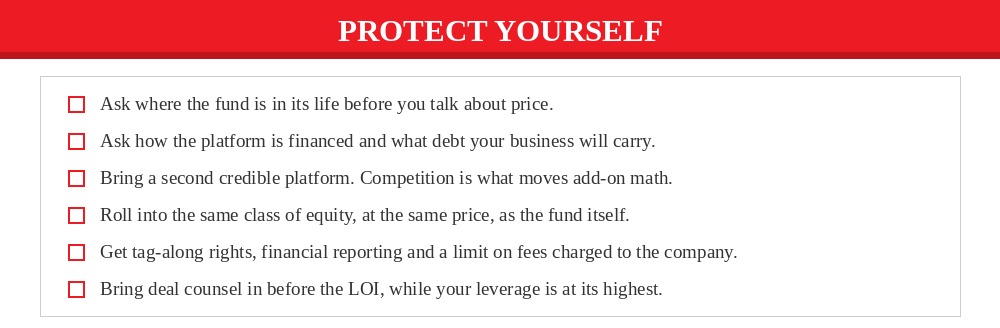
Elena’s advantage was not luck, and it was not a better business than her colleague’s. She asked how the buyer made money before she agreed to help it make money, and she negotiated her stake as if it mattered, because it did.
If you recognize your situation in this story, you are not alone, and you have options.
The DHC Hospitality & Restaurant Law Group represents restaurant and hospitality owners in sales, acquisitions, partnership disputes, and ownership transitions throughout New York, backed by the firm’s more than 50 years of experience representing New York businesses.
—————————————
Contact us for a confidential consultation:
Andreas Koutsoudakis, Esq. | Partner & Co-Chair
(212) 557-7200 | aak@dhclegal.com
This article is for informational purposes only and does not constitute legal advice. Every situation is different, and you should consult with qualified counsel to evaluate your specific circumstances.